

Hello everyone! It’s been quite a while–about five months–since I last posted. There are reasons for this, but I’ll touch upon them in a shorter post to follow this one, which will also recount a very short trip to Crystal River Archaeological State Park, which occurred in August but was (obviously) un-written about here.
But I digress, as always. A short holiday break from my job has enabled me to take one last trip this year with my Florida State park pass. A relative lack of available travel time/time to myself meant that this month’s park was one that:
- is nearish to my home and thus one I’ve been to a couple of times, and
- one that I’ve kinda avoided due to its relative familiarity AND my prior experiences with its particular habitat (I shall explain shortly).
So, I drove up US 19 a few days ago and found my way into the main area of Werner-Boyce Salt Springs State Park. (There are other areas attached to the park; but I decided to re-brave the “main” area, whose address is highlighted on the state park site.) The weather was very mild for wintertime (I do not say this with joy–it should not be in the 80s all December) but much cooler than I last went (in summer, a couple of years ago), so I was ready to walk the relatively un-shaded trails I knew awaited me.
(Speaking of “un-shaded trails,” the reason I have not returned to this quite-close-by state park since my eldest was a year and a half old or so is because of my last experience there, when I met my parents and saddled my son into his old offroad stroller for a quick walk. It had to have been in the 90s that day, and the sun was scorching. Most of the trails are through palmetto, so shade was a scarce commodity, and the walking was not overly pleasant because of it. But it wasn’t the sun that made the experience so accursed… It was the MOSQUITOES. They were a scourge upon us as we tried to walk the mile or so of trail that branches out on the right side of the park. I fervently tried to brush them off my son, who was already cranky at it being so bright and hot. I had underestimated the threat the darned insects would hold and had declined applying DDT to either him or myself, thinking the risk to be unequal to the reward. I was so, so wrong. CLOUDS OF MOSQUITOES. I am usually calm under the pressure of nature (or at least the pressures of nature I tend to face–heat, exhaustion, bugs, wild animals) but this was too much for me, especially with a toddler. I ran him back through the trails and to the car… and I have had no desire to bring either child back.)
Let’s go back to this week, however. I was alone and thus ready to face anything, should there be anything to face. I started off from the central parking lot to check out where the kayaks are rented and launched, although I had no plans to make use of that amenity. I imagine it would be a pretty nice place to kayak from, however, given that you can get close to the salt springs that give the park its name. Other than that, I wouldn’t personally be too eager to kayak on the Gulf–I’ve done so in the past and suffered some serious sunburns and thirst. Plus, I find kayaking on the Gulf to be a very physically taxing activity without much to recommend it in terms of sight-seeing, mostly. (Past kayaking trips, pre-children, did reveal stingrays in the water beneath me, which are kinda cool to spot… But I prefer kayaking in springs where there’s shade and more flora and fauna to spot. I haven’t brought my children on any type of boat, however, because I fear their potential boredom or frustration in such a tight, cramped space.)
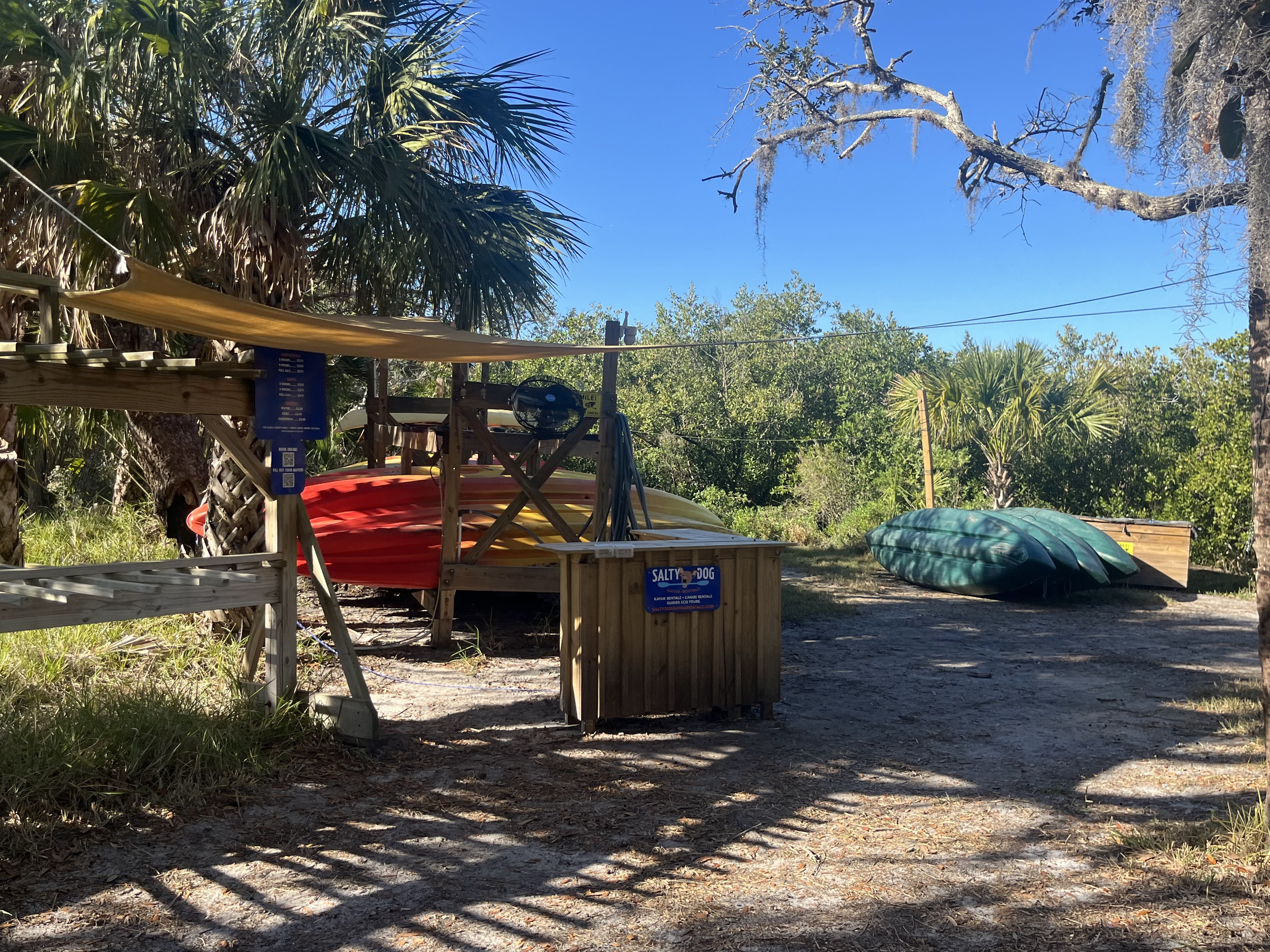

Near to the launch was a nice shaded area with a picnic bench–very pleasant to behold. But I didn’t have a lot of time, so I carried on towards the other side of the park, where trails to visit the springs could be found.

I knew that there wasn’t much mileage to be done at the park, but I was determined to make the most of it. I wandered off towards the first spring, which as you can see stands very close to the trailhead. It sends its water speedily towards the brackish inlet that lays nearby.
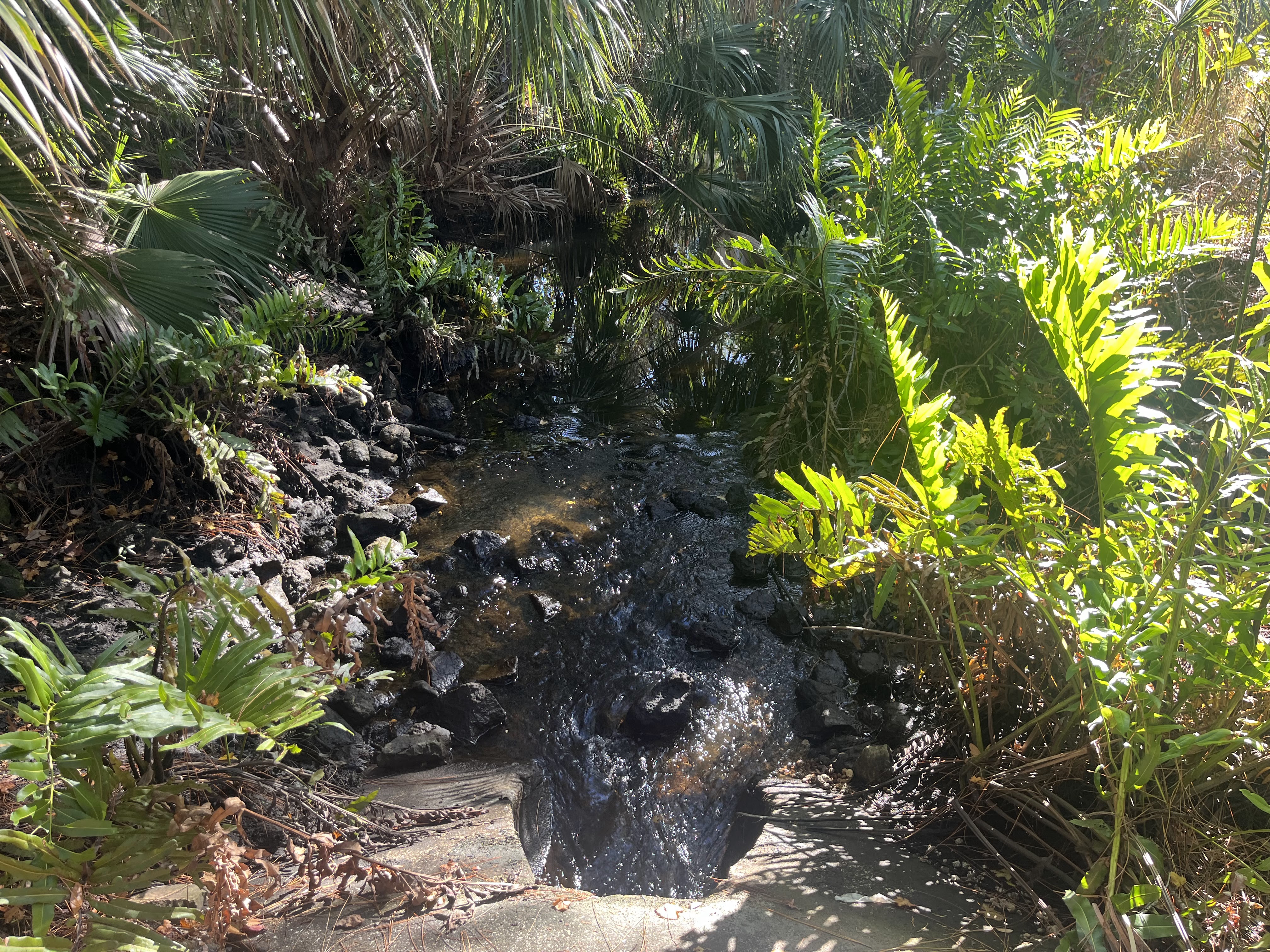
If you know Florida wilderness at all, then you probably already know to avoid playing in the water–fresh or salty or brackish–but the park explicitly forbids you from doing so. Alas, if you had wished to do so…

As the trail went on, signs of hurricane damage from the two storms that came through in the early fall began to show. One part of the trail was closed off; a bridge meant to lead to it was cordoned. But I don’t listen very well (especially when I’m not actively parenting a child and trying to model good behavior), and the bridge did not seem so perilous. I walked over the barricade and over the bridge and onto the forbidden trail.

(You can see that I obviously was not the only person to do so in recent times.)
During this section of my walk, the order of events gets rather blurry. (That is not to say anything spectacular was seen or occurred, just that I may report on my findings out-of-order.) The trail, even when technically closed, was walkable by any able-bodied person over the age of, say, three. It would not have been easy to get a stroller into either the forbidden portion or even the non-closed-off part, which did have some muck remaining from past rains over the last week or so.
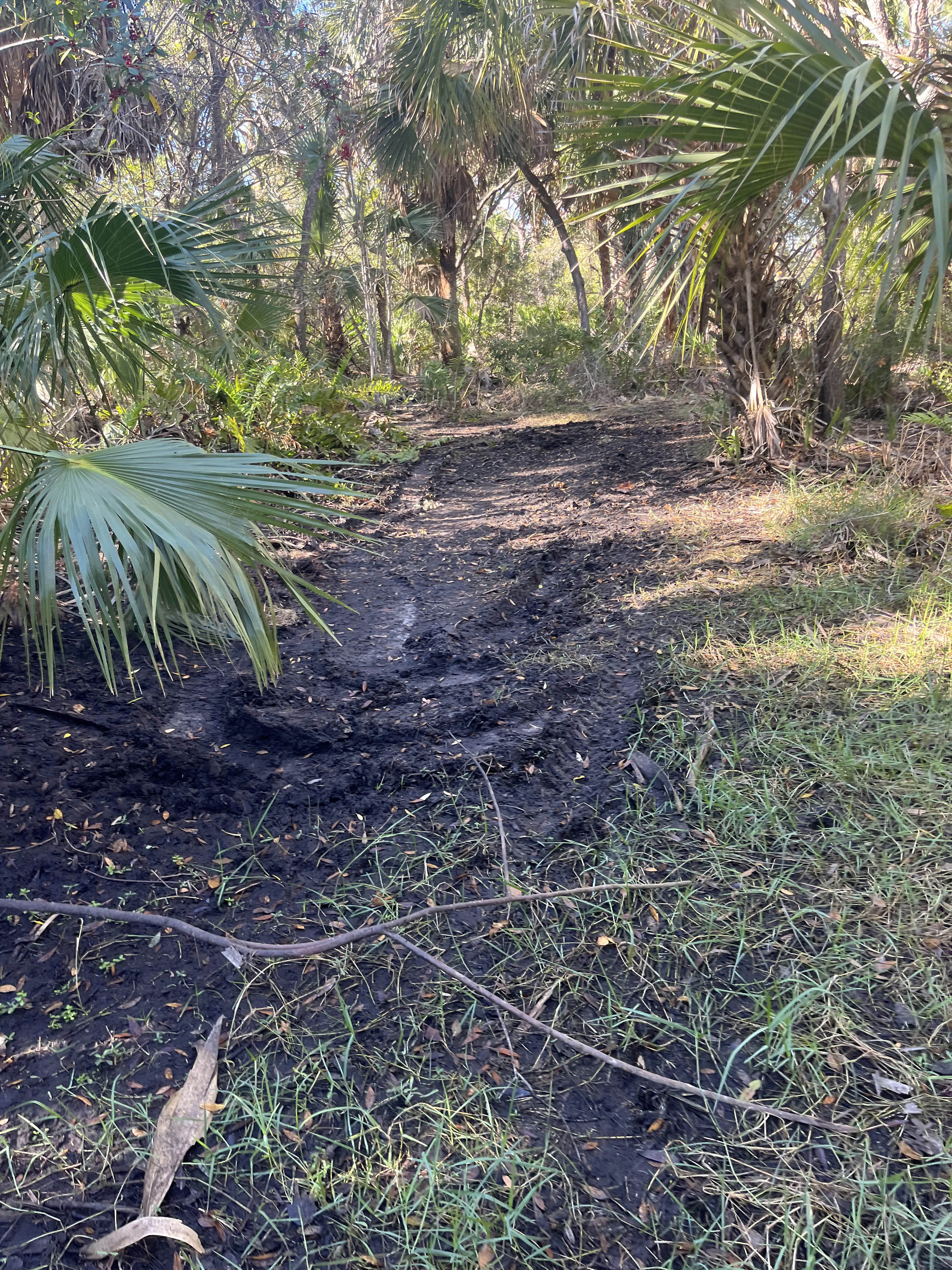
But I was alone and unfettered by the need to watch over any child’s footing, and things were perfectly fine. I did encounter a couple of mosquitoes, which alarmed me momentarily, but once I entered the mesic flatwoods portion of the trails, their presence was no longer noted.

Since I could walk relatively quietly (my eldest son is notoriously loud), I was hoping I would see some wildlife. That didn’t quite pan out. I saw lots of brown anoles and a woodpecker, though. Birds are not my forte, so I can’t promise I am right, but I believe it was a smallish pileated woodpecker… If only because of its very Woody the Woodpecker “hairstyle.”

Although I made no startling discoveries in the world of biology, I did learn something new about history. I hadn’t known that the park was once the site of a turpentine harvesting operation. Given the prevalence of pine trees in the park, it’s not a BIG surprise, but…
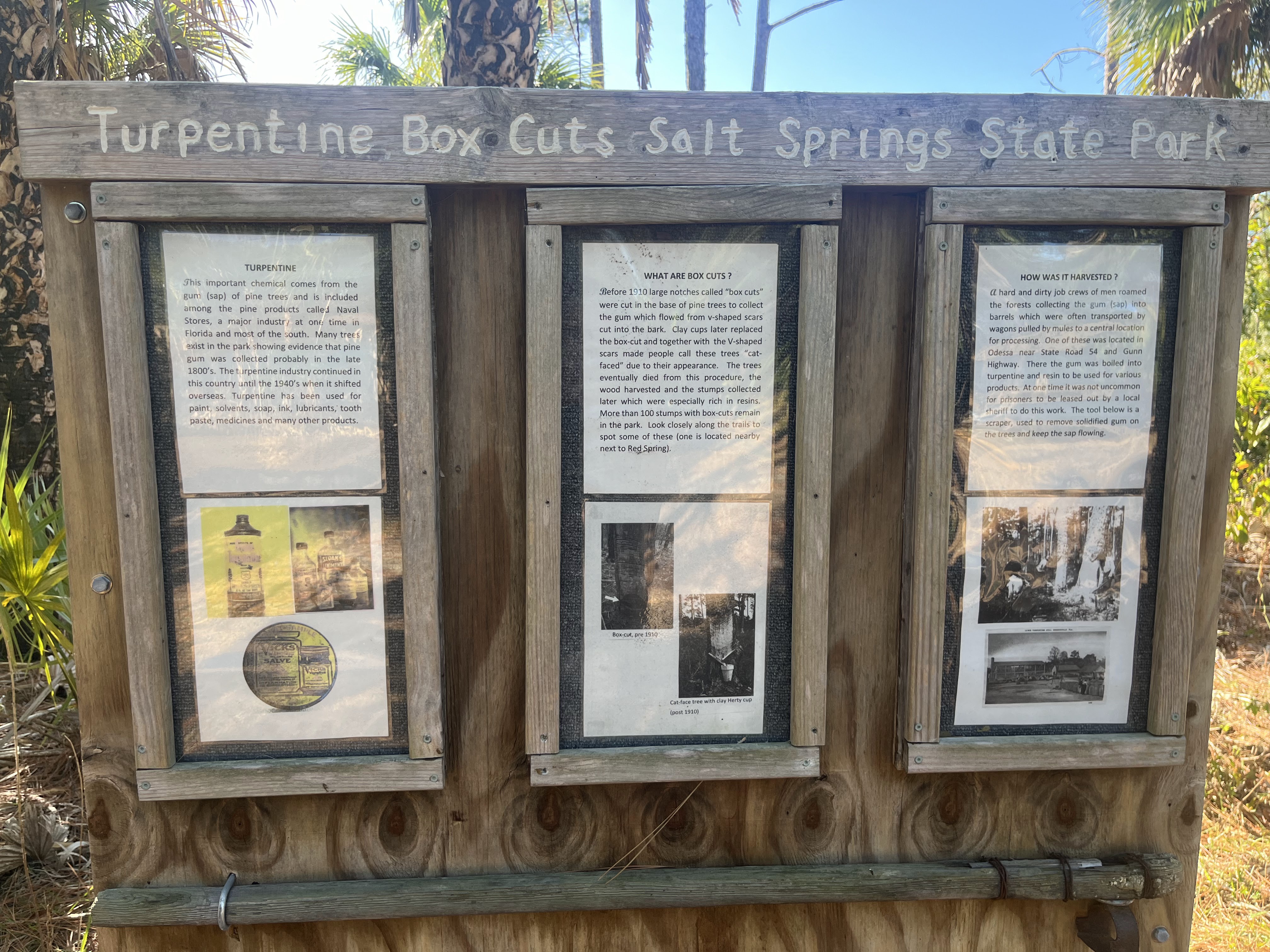
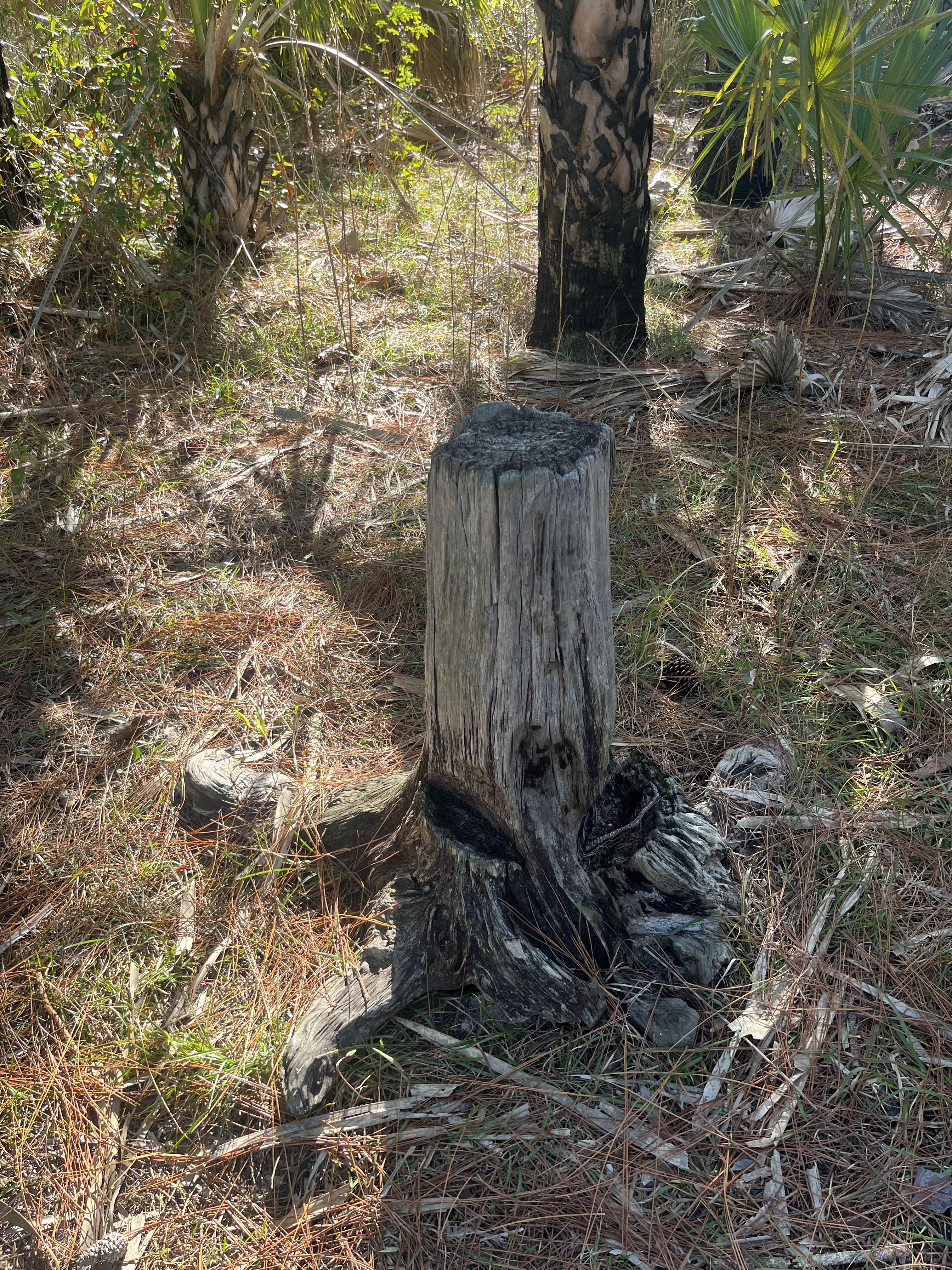
What really struck me as interesting was that they had left a stump of a tree that, reportedly, had been tapped in the early 1900s. I thought only cypress tree stumps could, or would, survive such a span of time.
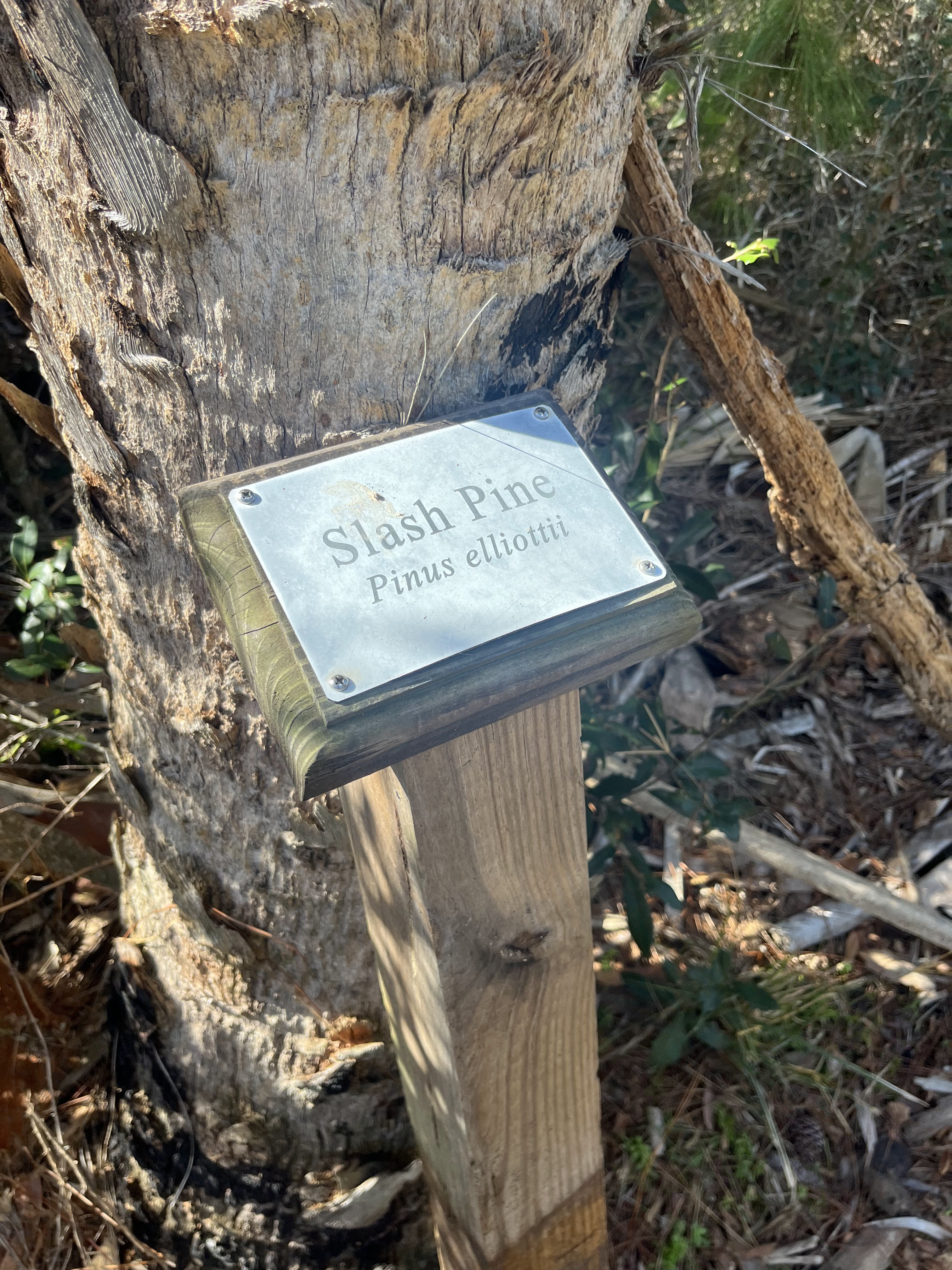
The slash pines that once were used for turpentine production are still predominant in the park. I was going to call upon my old botanical training and make reference to identifying pines by the count of needles in a fascicle (that is, the bunch of needles that grow from a branch), but I have been thwarted. Slash pine usually has two needles per fascicle and long-leaf pine, three. I picked up two separate fascicles near to the sign below and both had three needles. I can’t say I looked at any other identifiable features, so I’m not sure if the sign was meant for another tree, or if the slash pines in that area tend to have three needles per bunch… This warrants more investigation in the future!


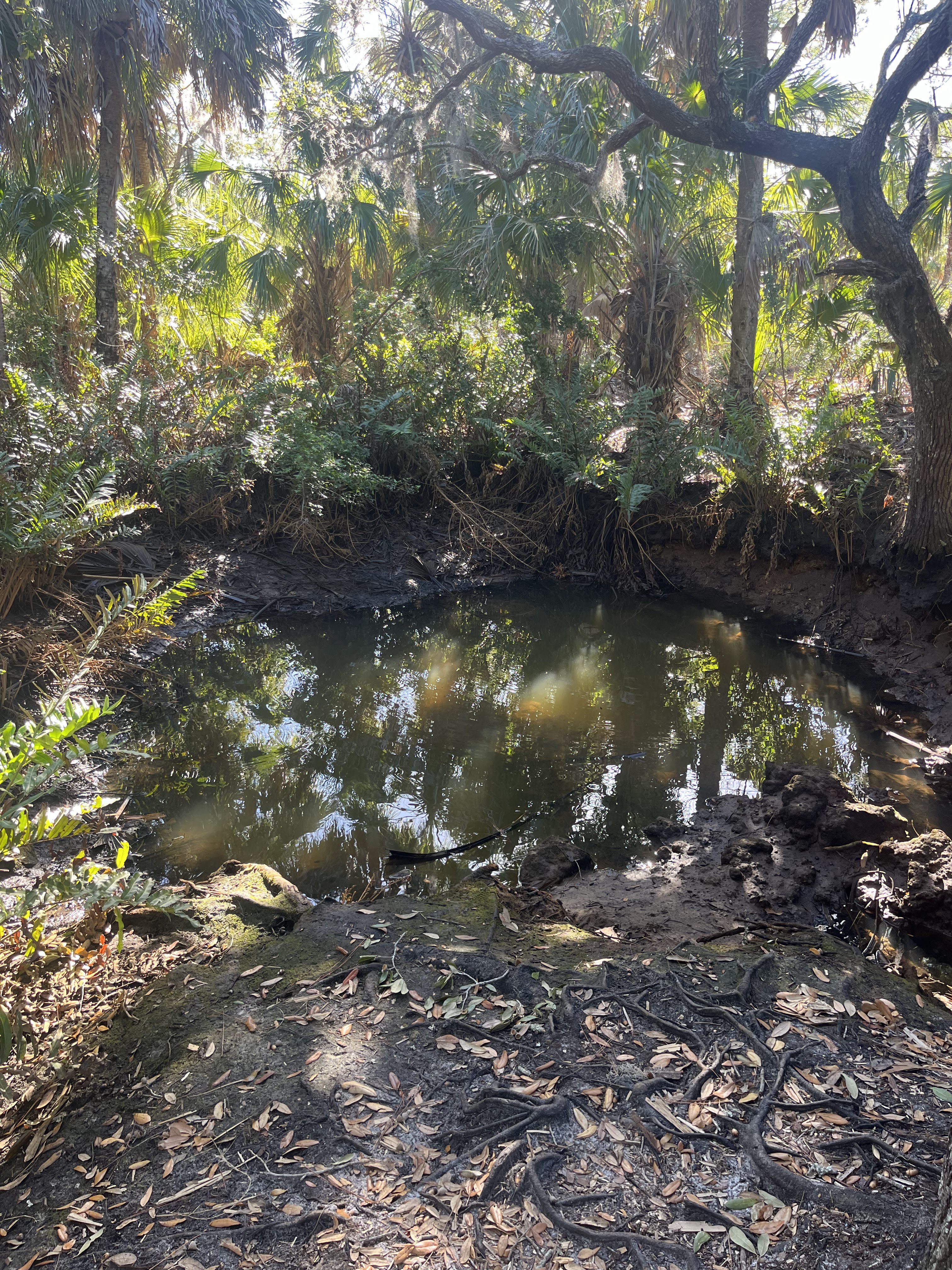
During the course of my walk I missed most of the springs that park boasts of. Of those I did come across, though, the Reflection Spring was the most affecting. My pictures do no justice to it. Gazing upon it is like looking at a painting. The water has the depth of color and shading of a gem.
After staring into the mesmerizing Reflection Spring, I assumed I was ready to go. I walked back to my car and, after turning the engine on and putting the car into reverse, realized there was one trail I’d overlooked on the opposite side of the parking lot: the Eagle’s Nest.
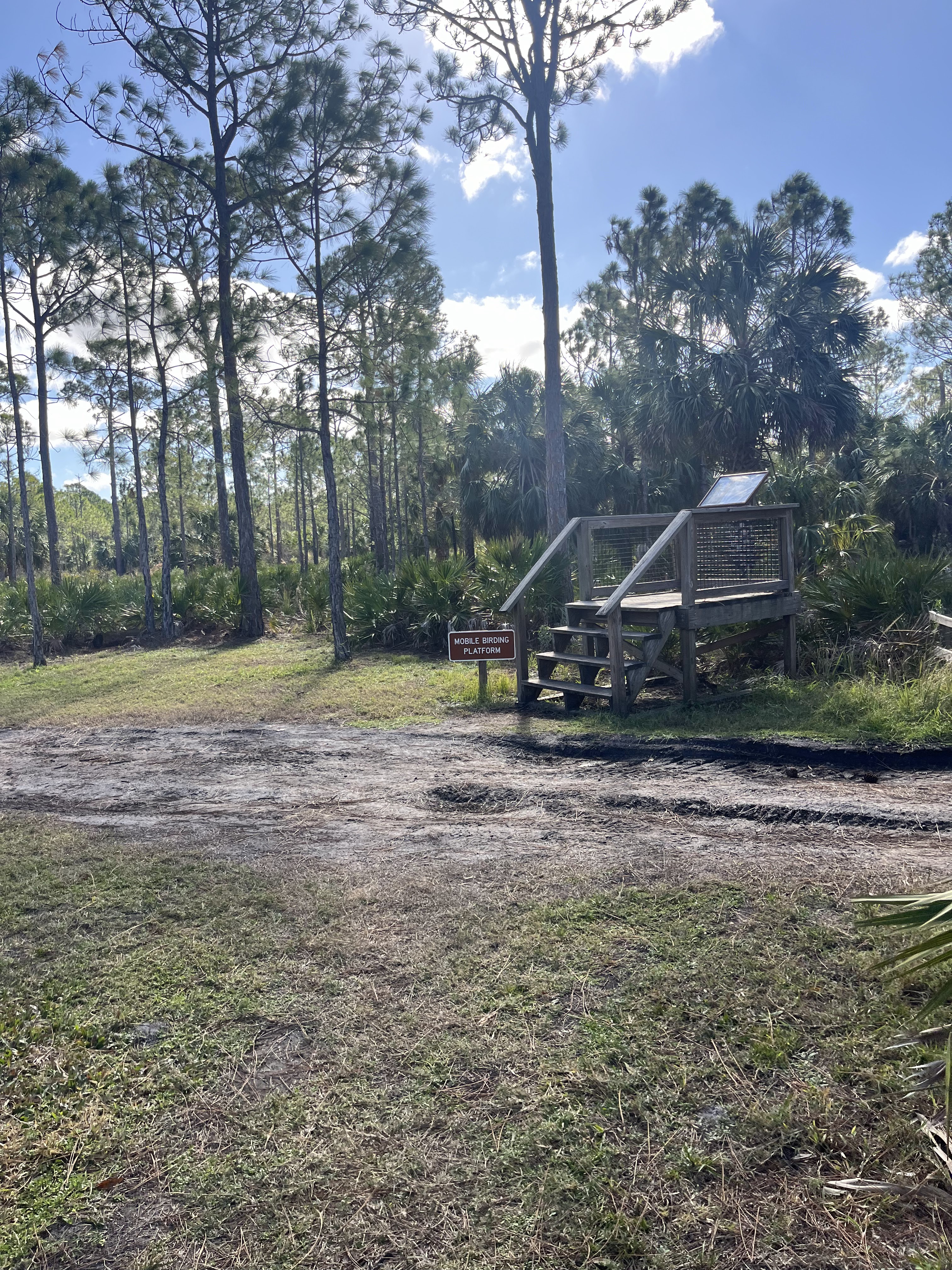
It was another short jaunt, less than a quarter mile, and it terminated in a mobile birdwatching platform that offered a view of (what else?) an eagle’s nest in the distance.

The nest appeared empty to the naked eye, and the clock appeared very near to when I had to pick my youngest up from his babysitter, so off I went to the car and towards my child.
And that is Werner-Boyce Salt Springs Park!
Would I bring my kids here? Not yet. There’s little for young children to enjoy (no park, no boardwalks) and the habitat is inhospitable in summer, spring, and fall. But it’s worth a short trip now and again as a middle-aged person.
 Trekkin' From Tampa